

Instagram ads don't have a fixed price. Meta sells every ad impression through an auction: all advertisers who want the same audience compete with each other, and the price changes every day. So the honest answer to "how much do Instagram ads cost?" is this: plan your budget around the result you need, not around the ad. In this article we show, step by step, how to calculate a budget, what eats your money and how to protect it.
How Meta prices an ad
Every time someone opens Instagram, Meta decides within milliseconds which ad to show them. The winner isn't simply the highest bidder. Meta looks at three things:
- Bid: how much you're willing to pay for this result
- Estimated action rate: how likely this person is to respond to your ad
- Ad quality: whether people like the ad or hide it
In other words, a strong creative gets cheaper results on the same budget, while a weak ad stays expensive no matter how much money you put behind it.
6 factors that drive the cost
- Objective. Messages, lead forms, website traffic, sales — each one has a different price. Sales is usually the most expensive, because Meta only shows the ad to people who are likely to buy.
- Audience. A narrow, competitive audience (for example, women aged 25–35 in a capital city interested in beauty) costs more.
- Creative. A video that grabs attention in the first 2 seconds can cost 2–3 times less per result than an ordinary image.
- Season. Around holidays, New Year and Black Friday there are more advertisers, so impressions get more expensive.
- Industry. Jobs, credit and housing fall under Meta's special ad categories: targeting is limited and costs go up.
- Account history. A new ad account starts out more cautiously. The more stable your results, the better the algorithm learns.
Calculating the budget: work backwards
The most reliable method starts from the number of customers you want. The example below illustrates the logic, not a real campaign:
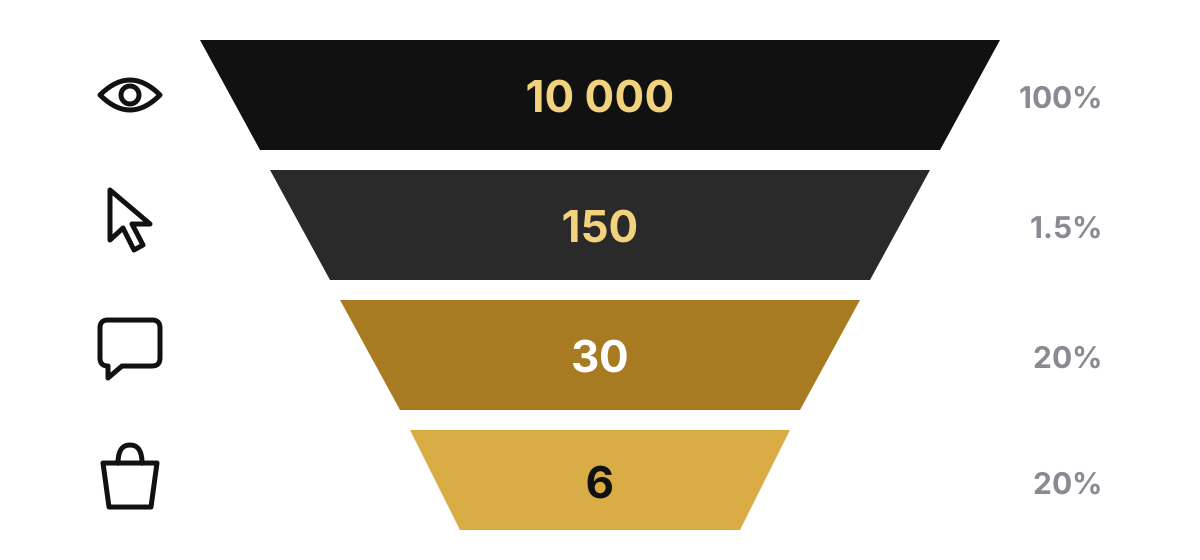
- How many sales do you want per month? For example, 30 sales.
- What share of people who message you end up buying? Say 20%. That means you need 150 messages.
- What does one message cost? Only a test can tell you. Say $1.50.
- Monthly budget: 150 × $1.50 = $225 plus a 10–15% buffer.
Don't start from "how much money do I have", start from "how many customers do I need". That turns advertising from an expense into an investment.
The test phase: the first 7 days
Nobody knows the real price in advance, so the first week is a test week:
- Prepare 2–3 different creatives (video, carousel, single image)
- Give each one the same small daily budget
- Wait at least 3–4 days. In the first days the algorithm is in its "learning phase" and results jump around
- On day 7, compare: where is the cost per message or per lead lowest?
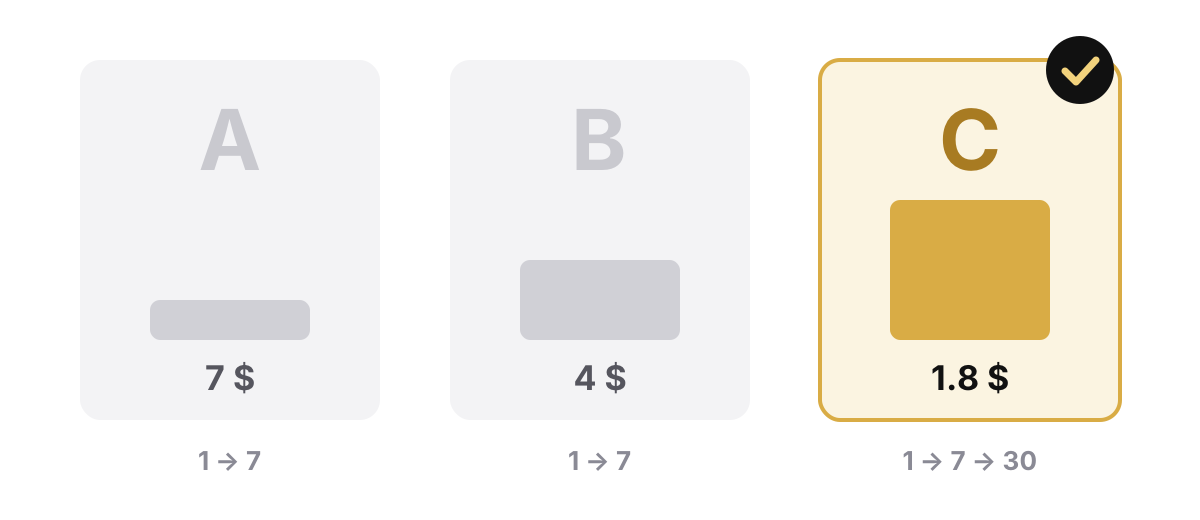
Keep the winner, pause the weak ads and move the budget to the winner. Don't double the budget overnight: increasing it in 20–30% steps doesn't throw the algorithm off.
The numbers to watch
- CPM — cost per 1,000 impressions. Shows how expensive your audience is
- CTR — the share of impressions that turn into clicks. Below 1% means the creative is weak
- Cost per message / lead — your main metric
- Conversion to sale — the share of people who message and then buy. This measures your sales team, not your ads
- ROAS — how much revenue comes back for every unit of currency you spend
5 mistakes that burn money
- Pressing "Boost" on every post. Without a strategy, it's the most expensive route
- Narrowing the audience too much
- Changing the ad after 1–2 days and never letting the algorithm learn
- Replying to messages late. A customer who waits 10 minutes writes to your competitor
- Not measuring results. If you don't know which ad brings sales, you're spending blind
How to measure what your ads bring in
Ads Manager shows clicks and messages, but it doesn't show which message became a sale. For that you need every inquiry in one place, with a status for each one (new, in progress, sold). BlackArmy CRM brings Instagram, Facebook and WhatsApp messages into one inbox, replies automatically and shows how many sales each ad produced.
In short
- Work out the budget backwards from the number of sales you need
- Treat the first week as a test and compare 2–3 creatives
- Keep the winner and grow the budget gradually
- Reply to messages fast and record every sale
Want us to set up your ads for you? Message us on WhatsApp and we'll work out the budget together.